

Whoa! I opened my browser and felt weird energy. Seriously? The usual wallet pop-ups were everywhere, and something felt off about how many approvals one tiny dApp wanted. My instinct said: this is a UX and security problem wrapped together—ugh. Initially I thought every extension wallet was basically the same, but then I started poking at Rabby and noticed subtleties that changed my mind.
Here’s the thing. Rabby isn’t flashy for the sake of flash. It focuses on workflow—speed, clarity, and safety—so you stop guessing what a transaction will really do. I like that. I’m biased, but a wallet should reduce cognitive load during a trade, not add to it. On one hand many wallets list permissions in a wall of text; on the other, Rabby gives readable cues and contextual warnings that actually matter. Though actually, wait—let me rephrase that: Rabby layers security nudges so you have time to think, not just click faster.
Hmm… the first time I used Rabby I was testing a complex multi-step swap. The UI walked me through approvals so I didn’t accidentally grant infinite allowance. Something small, but it saved me from a messy reversal later. Also, Rabby shows gas and slippage data in a way that didn’t make me squint. My initial impression was “nice,” and then the more I used it, the more features felt intentionally placed, not thrown in.
Short story: it supports multiple chains and hardware wallets without looking like a sci-fi control panel. That matters if you jump between Ethereum, BSC, and Layer 2s during a single afternoon. The extension isolates networks so you don’t accidentally sign a tx on the wrong chain. I noticed fewer “oh no” moments. Seriously—your future self will thank you.
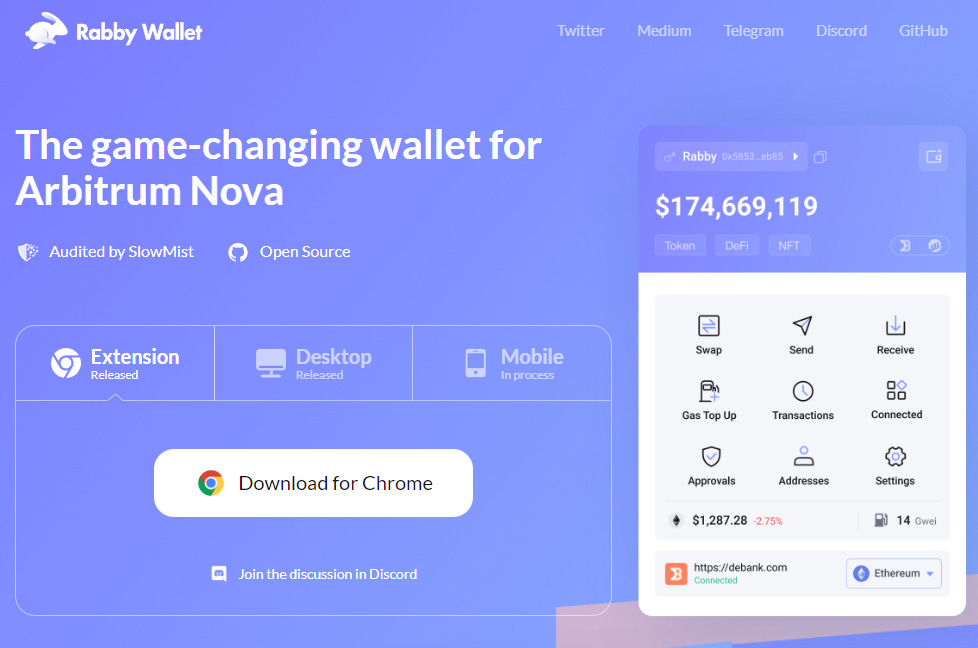
Why the little things add up
Whoa! Tiny UX fixes make huge security wins. Rabby shows domain-level approvals, simulates transactions, and warns about risky approvals. My instinct said the simulation would be fluff, but it actually flagged a token contract that attempted an odd transfer method. Initially I thought that was overkill, but then a tx that would have drained funds was stopped because of the alert.
Here’s what bugs me about many extension wallets. They treat advanced features like trophies. Rabby treats them like safety equipment. I’m not 100% sure how they balance convenience and protection behind the scenes, though their open-sourced approach gives decent transparency. (oh, and by the way…) you can pair hardware wallets like Ledger and Trezor if you prefer to keep keys air-gapped, and Rabby’s flows make that pain-free.
Honestly, when a wallet reduces clutter, you trade less in confusion. Rabby has clear transaction histories and better labeling for approvals, so you don’t sign “approve” blindly. My working assumption used to be “approve now, think later,” but Rabby forces a pause. That pause is a good thing. It nudges users toward safer habits without yelling at them.
Something felt off about some dApps I tested, and Rabby flagged patterns that looked like signature reuse or suspicious allowance requests. That kind of proactive detection isn’t common in browser extensions. I’m not saying it’s perfect. No product is. But it’s a meaningful step forward compared with the minimal warning banners other wallets show.
Okay, so check this out—if you’re looking for a straightforward way to try Rabby, here’s an official place to get it: rabby wallet download. I put that here because downloading from the correct source is very very important; don’t grab randos off search results or third-party mirrors. My advice: verify and double-check signatures if you can, even if it’s a bit tedious.
My experience with support was surprisingly human. I opened a ticket about a syncing quirk and got a helpful reply that didn’t feel cookie-cutter. That matters—wallets are part of money infrastructure, and good support reduces friction. On the flip side, the extension landscape evolves rapidly, so patches and updates are frequent; keep your extension current. Otherwise you may be dealing with outdated dialogs and behavior that no longer matches on-chain realities.
On a technical note, Rabby isolates dApp contexts so approvals and signatures live in clearer boundaries, which reduces accidental cross-site permission grafting. This is practical engineering, not just marketing. Initially I thought isolation would complicate multisig setups, but Rabby handles common multisig flows gracefully—no contortions required. Actually, wait—there are edge cases where advanced setups still require manual care, so don’t assume full automation in every scenario.
I’m biased toward wallets with guardrails. Rabby gives you smart defaults and lets you override them. That’s my sweet spot. If you like to tinker and control gas and nonce values manually, it’s possible. If you just want a safe default to connect to Compound or Uniswap, Rabby’s sensible UX gets you there without drama. The balance between power and simplicity? They’ve walked that line thoughtfully.
To be clear: Rabby isn’t a silver bullet for phishing and social engineering attacks. No wallet is. You still need to watch URLs, verify token contracts, and keep seed phrases offline. But Rabby does a lot of the heavy lifting by providing context and warnings so your guardrails are more than just a mental checklist.
Common questions people actually ask
Is Rabby open source and auditable?
Yes, portions of Rabby are open source and the team publishes information about audits and security practices. That transparency helps, though auditing a wallet is ongoing work because new attack patterns arise. I’m not 100% certain every module has been formally audited, so double-check the latest repo and audit announcements if that matters to you.
Can I use Rabby with a hardware wallet?
Yep. Rabby supports linking hardware wallets like Ledger and Trezor. Pairing felt straightforward in my tests, and transactions signed via hardware keep private keys offline. On one hand this reduces convenience, though on the other it’s the trade-off you want when security is top priority.
Does Rabby work across chains and Layer 2s?
Yes, Rabby is built with multi-chain support in mind, including popular Layer 2 networks. The extension switches networks cleanly and keeps approvals scoped to the active chain, which is useful when you move assets between networks in the same browsing session. Still, test with small amounts first—learn the ropes before big moves.